Buy Vitamin K: Vitamin K2 with D3
Vitamin K is a vitamin you might not immediately think of, but which your body needs every day. It is a fat-soluble vitamin, and you mainly get it from your diet. Think of green leafy vegetables such as spinach, kale and broccoli, but also cheese, eggs and meat. A varied diet usually provides enough vitamin K. However, some people choose to supplement their diet with a vitamin K supplement.
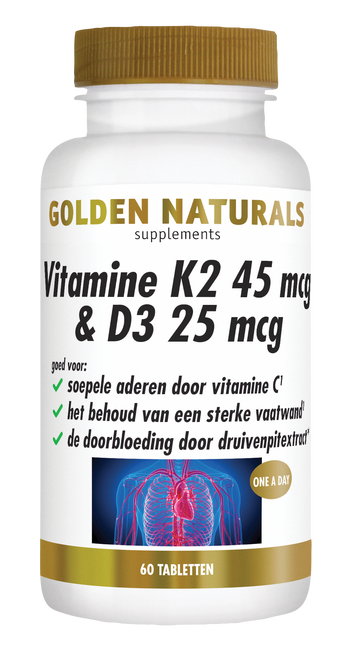
At Golden Naturals, you can buy vitamin K in the form of vitamin K2, always combined with vitamin D3. You can choose between vitamin K tablets or capsules, in two strengths, both of which are vegetarian. Not sure which one suits you best? Our selection guide will help you make the right choice in just a few steps. Have you made your choice? Then you can easily order your vitamin K supplement online and have it delivered to your door in no time.
Vitamin K1 and K2: what’s the difference?
Vitamin K is the name given to a group of substances. The two most important are vitamin K1 and vitamin K2. Vitamin K1 (phylloquinone) is found mainly in green vegetables. Vitamin K2 (menaquinone) is found in smaller quantities in foods such as cheese, egg yolk and liver, and in fermented products such as natto, a Japanese dish made from fermented soya beans. Vitamin K2 itself also comes in various forms. MK-7 is one of these forms, and it is often found in supplements.
Which vitamin K is right for you? Here’s what to look out for
At Golden Naturals, we’re often asked this question: which vitamin K2 is actually the best? To be honest, there isn’t one ‘best’ vitamin K. It depends on what matters most to you. Both of our vitamin K supplements contain vitamin K2 and 25 mcg of vitamin D3. They differ in two ways.
- The amount of vitamin K2 per daily dose: 45 mcg or 200 mcg
- Form: tablet or capsule
Our range at a glance
The dosage that’s right for you depends on your personal circumstances. Always follow the daily dosage stated on the packaging. Are you looking for vitamin D3 on its own, without vitamin K? If so, take a look at our vitamin D supplements.
What does vitamin K do?
These are the officially recognised health claims for vitamin K:
- Vitamin K contributes to normal blood clotting
- Vitamin K helps maintain normal bones
Good to know: these claims apply to all forms of vitamin K, provided the supplement contains sufficient vitamin K per daily dose. You can find out how much vitamin K a product contains by checking the label.
Frequently asked questions about vitamin K
What foods contain vitamin K?
Vitamin K1 is mainly found in green leafy vegetables, such as spinach, kale and broccoli. It is also found in other vegetables, fruit, milk and dairy products, meat, eggs and cereals. Vitamin K2 is found in smaller quantities in foods such as cheese, egg yolks and liver, as well as in fermented products such as natto.
Why are vitamins D3 and K2 often taken together?
Vitamin D and vitamin K each have their own recognised health claims. Vitamin D contributes to the normal absorption and utilisation of calcium and phosphorus, and to the maintenance of normal bones. Vitamin K contributes to the maintenance of normal bones and to normal blood clotting. With a combination supplement, you can take them together in a single tablet or capsule.
How much vitamin K do you need each day? Even as an older person?
According to the Netherlands Nutrition Centre, the recommended daily intake of vitamin K1 for adults aged 18 and over is 70 micrograms. This applies to all adults, including older people, as well as during pregnancy and whilst breastfeeding. For children and teenagers, the recommended amount is lower, depending on their age. If you’re taking a supplement, always follow the daily dose stated on the packaging.
Can I take vitamin K if I’m on blood thinners?
Vitamin K can reduce the effectiveness of certain blood thinners. The Netherlands Nutrition Centre advises people taking blood thinners or anticoagulants to be cautious when taking supplements containing more than 100 micrograms of vitamin K. Are you taking blood thinners? If so, always consult your doctor, pharmacist or the thrombosis service first before taking a vitamin K supplement.