Buy vitamin D3: capsules, chewable tablets and drops
Vitamin D is a special vitamin because your body produces most of it itself. This happens in your skin, when exposed to sunlight. You also get a small amount from your diet, for example from oily fish, eggs and meat. In the Netherlands, the sun is much less intense in autumn and winter. That is why many people choose to top up their vitamin D with a supplement.
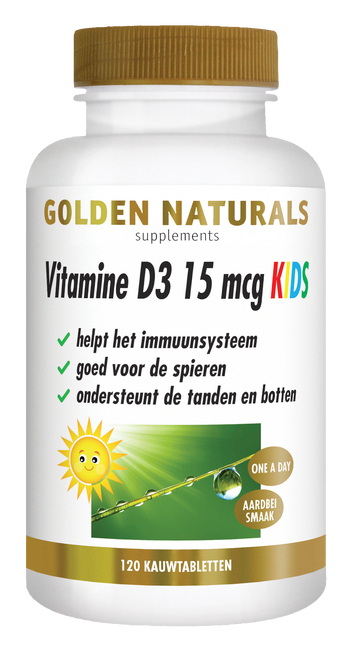
At Golden Naturals, you can buy vitamin D in all sorts of forms: as vitamin D capsules (softgels), chewable tablets and drops, in various strengths and also in a vegan version. Are you looking for vitamin D pills or tablets? Then our softgel capsules and chewable tablets are just what you need. Not sure which one suits you best? Our selection guide will help you make the right choice in just a few steps. Have you made your choice? Then you can easily order your vitamin D supplements online and have them delivered to your door in no time.
Vitamin D or vitamin D3: what’s the difference?
Vitamin D is the collective term for a group of substances. The two main forms are vitamin D2 (ergocalciferol) and vitamin D3 (cholecalciferol). Vitamin D2 comes from plant sources, such as mushrooms. Vitamin D3 is the form produced by your skin when exposed to sunlight, and is also found in animal products. Most supplements contain vitamin D3, including all Golden Naturals vitamin D supplements.
Vegan vitamin D3
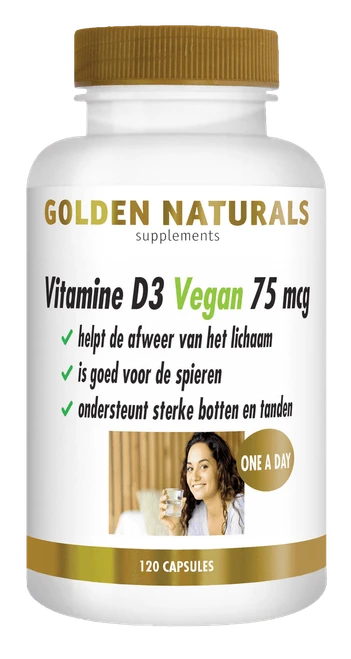
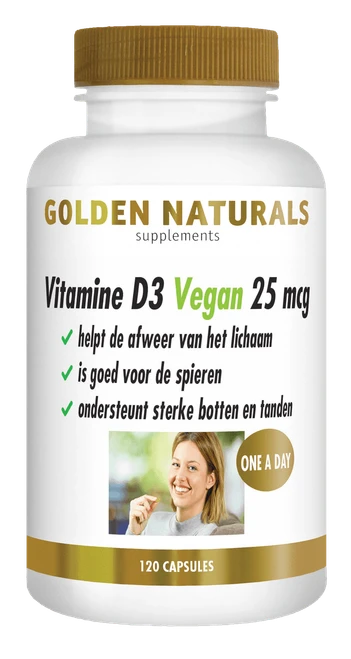
In supplements, vitamin D3 usually comes from lanolin, a fat derived from sheep’s wool. Are you vegan or vegetarian? If so, there is also plant-based vitamin D3, derived from lichen. You can find it in our range as Vitamin D3 Vegan 25 mcg and Vitamin D3 Vegan 75 mcg, both in vegan softgel capsules.
Which vitamin D is best? Here’s what to look out for
At Golden Naturals, we get this question all the time: what are the best vitamin D tablets? To be honest, there’s no such thing as ‘the best’ vitamin D. It depends on what’s important to you. Good to know: vitamin D supplements differ mainly in three ways.
- the dosage, expressed in micrograms (mcg) per tablet, capsule or drop
- Form: softgel capsules, chewable tablets or drops
- Source: animal or plant-based
Some supplements also combine vitamin D with other nutrients, such as vitamin K2 or calcium.
Our range at a glance
The right dose for you depends on your personal circumstances. Always follow the recommended daily dose stated on the packaging.
Vitamin D in combination with other nutrients
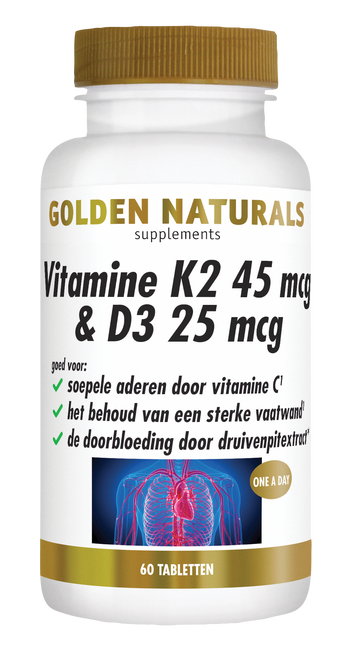
Are you looking for vitamin D combined with another nutrient in a single supplement? Then take a look at Vitamin K2 45 mcg & D3 25 mcg, Vitamin K2 MK-7 200 mcg & D3 25 mcg, Calcium & Vitamin D3 or Fish Oil 1400 TG with Vitamin D3. Would you like vitamin D with magnesium? Then Calcium, Magnesium & Zinc is an option, which also contains vitamin D. Are you taking several supplements at the same time? If so, add up the amounts of vitamin D.
What is vitamin D good for?
Vitamin D is involved in a whole host of processes in your body. These are the officially recognised health claims for vitamin D:
- Vitamin D contributes to the normal absorption and utilisation of calcium and phosphorus
- Vitamin D contributes to normal calcium levels in the blood
- Vitamin D helps maintain normal bones
- Vitamin D helps maintain healthy teeth
- Vitamin D helps maintain normal muscle function
- Vitamin D contributes to the normal functioning of the immune system
- Vitamin D plays a role in the process of cell division
That’s quite something! Good to know: these claims apply to all forms of vitamin D, provided the supplement contains sufficient vitamin D per daily dose. You can check the label to see how much vitamin D is in a product.
Frequently Asked Questions
What foods contain vitamin D?
Vitamin D is found in a limited number of foods, such as oily fish (salmon, herring and mackerel), eggs and meat. It is also added to low-fat margarine, margarine and cooking and frying products. The main natural source is sunlight: your skin produces vitamin D when exposed to the sun. Fruit and vegetables contain virtually no vitamin D naturally.
When is the best time to take vitamin D?
The time of day doesn’t really matter; you can take it in the morning or in the evening. Vitamin D is a fat-soluble vitamin. That’s why it’s best to take the supplement with a meal that contains some fat. Follow the daily dose indicated on the packaging.
What is the difference between micrograms and IU?
That’s just a different unit of measurement. IU stands for International Units. 1 microgram (mcg) of vitamin D is 40 IU. So 10 micrograms is 400 IU, 20 micrograms is 800 IU, 25 micrograms is 1000 IU and 75 micrograms is 3000 IU. For example, our Vitamin D3 25 mcg drops contain 1,000 IU per drop.