
Can magnesium dissolve in water?
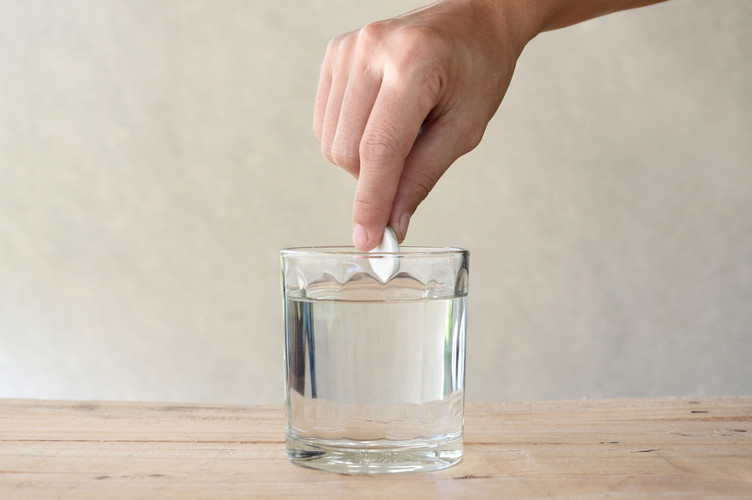
You may be wondering whether magnesium simply dissolves in a glass of water, and the answer depends entirely on the form you’re dealing with. The pure metal (yes, magnesium is actually a metal) behaves very differently from the substances you’ll find in a jar of mineral supplements. Whilst the silvery metal tends not to mix with liquids, there are specific compounds that, on the contrary, dissolve very readily. In this blog, we’ll look at how this process works and which forms are best suited for oral intake.
Properties of metallic magnesium
Metallic magnesium is a feather-light metal with a silvery sheen that is often added to other materials to make them stronger. When exposed to the open air, a dull layer quickly forms on the surface, protecting the metal’s interior from external influences. This natural barrier ensures that the material does not simply rust away or react. However, when ground into a very fine powder, its reactivity changes and it must be handled with care.
Reaction of magnesium with cold water
If you place a small piece of this metal in a cold glass of water, at first glance almost nothing happens. The protective layer mentioned earlier prevents the liquid from making actual contact with the active core of the mineral. As a result, the shape remains intact, and you can conclude that pure magnesium metal simply does not dissolve in water under cold conditions.
Reaction of magnesium with hot water and steam
The situation changes as soon as the temperature of the liquid rises to boiling point or it turns into vapour. The heat provides the process with more energy, making the interaction between the substance and the water proceed much more readily. A noticeable reaction occurs, during which gases are released and the material is broken down. This demonstrates that heat is the driving force behind the mobility of this mineral in a liquid environment.
Solubility of magnesium compounds in water
Among the magnesium compounds found in nature or synthesised in a laboratory, there are significant differences in how readily they mix with moisture. Variants such as magnesium chloride and magnesium sulphate are known for their ability to become virtually invisible in a liquid almost immediately. Other types, such as magnesium carbonate, on the other hand, are more likely to settle at the bottom of the glass as a sort of precipitate, as they do not dissolve as readily. This property largely determines how a magnesium product can be used in practice.
Practical applications and implications
Many people prefer to get their daily minerals from a drink rather than swallowing a (often large) tablet. A highly soluble form such as magnesium citrate is ideal for this, as you can easily add it to your favourite juice or simply to a water bottle. It’s a good idea to check the instructions on the packaging of your dietary supplements to see whether your chosen form is suitable for this. This makes it easier for you to stick to your personal routine using a method that suits you. To avoid the hassle of dissolving magnesium powder or capsules in water yourself, a magnesium product in drink form has also been developed. This innovative drink contains five water-stable forms of magnesium to ensure effective absorption by the body. Using the measuring cap provided, you can measure out the right dose of the drink – which, incidentally, tastes great – and take it easily.
Summary
Whether magnesium mixes with water therefore depends entirely on its chemical structure and, in some cases, the temperature. Pure magnesium metal remains stable in cold water, whilst many compounds used in supplements dissolve extremely quickly. In our extensive range of magnesium products, you’ll find various forms that you can easily incorporate into your daily routine. Looking for a liquid form? Then choose our liquid magnesium. For more in-depth information, do take a look at our blog to discover which supplement best suits your lifestyle and circumstances.